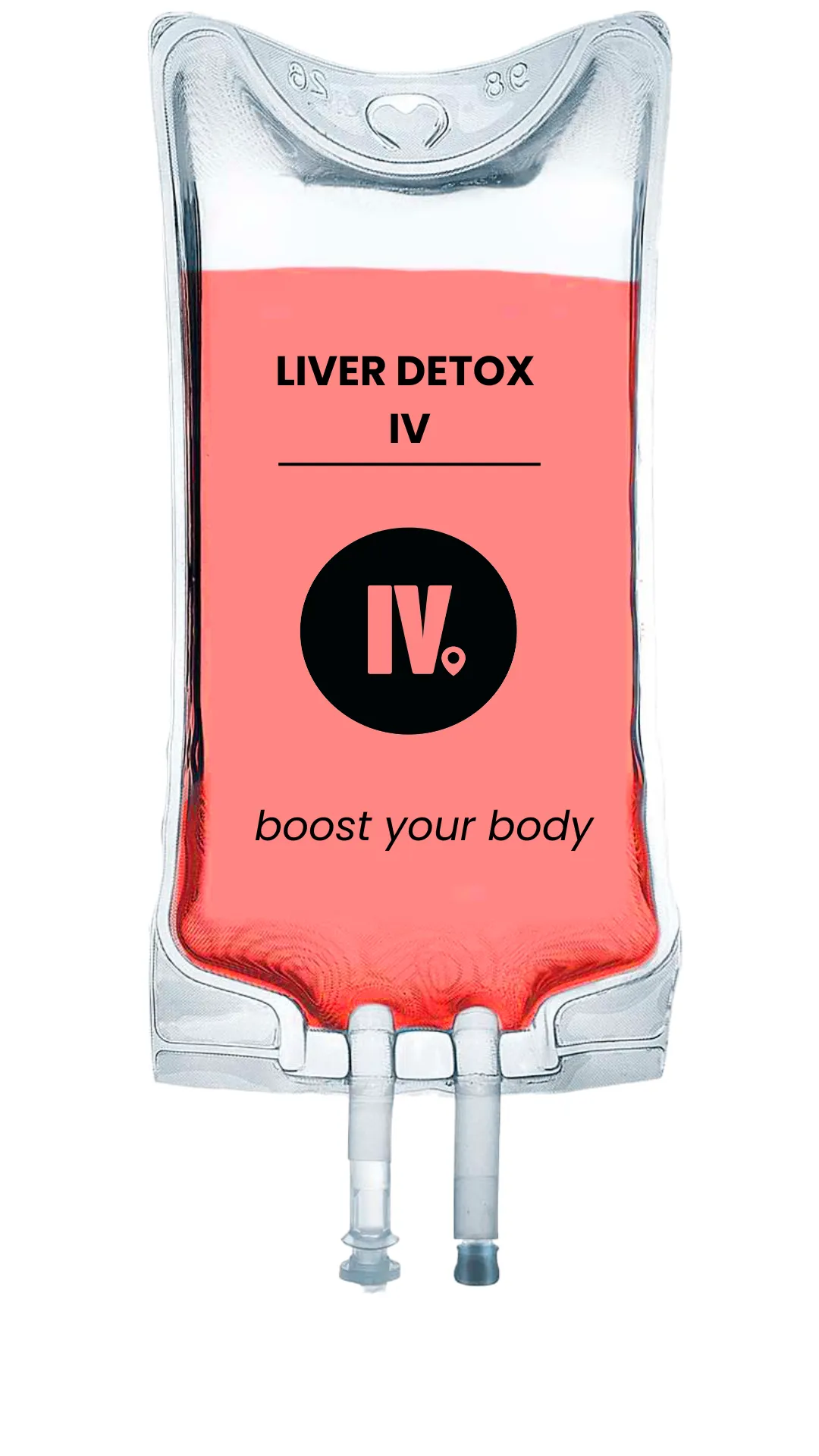
What is Liver Detox IV therapy?
It is a supportive treatment that directly replenishes — intravenously — the molecules at the centre of the liver’s own detoxification system, glutathione first among them. It targets the antioxidant reserve the liver consumes during periods of increased oxidative load, and delivers glutathione — whose oral absorption is negligible — into the systemic circulation by bypassing the digestive step. Sessions at IV Point take 30–60 minutes and follow a physician assessment.
Is There Such a Thing as a “Liver Detox”?
Let’s settle this question up front, because most of what the market says is misleading.
The liver is not the organ that gets detoxed — it is the organ that does the detoxing. The system that processes medications, environmental chemicals and metabolic waste into excretable form is the liver itself; alongside kidney excretion, hepatic metabolism and biliary excretion are the main routes by which these substances leave the body.1
So phrases like “cleansing the liver” or “flushing out toxins” have no medical meaning. A healthy liver already does this job; what a damaged liver needs is not an infusion but a real medical evaluation.
So what remains? This — and it is real:
Liver detoxification proceeds in two phases. In the second (phase II conjugation), the central role belongs to glutathione. Acting as the cofactor for the glutathione-S-transferase enzyme, it takes direct part in detoxifying electrophilic substances and xenobiotics.2 When the liver’s oxidative load rises — alcohol, certain medications, environmental factors — this molecule is consumed and the cellular antioxidant reserve falls.
There is also something worth knowing about oral glutathione: in a study of healthy volunteers, standard oral glutathione produced no significant rise in plasma glutathione levels; systemic bioavailability in humans was reported as negligible.3 Intravenous administration bypasses digestion and first-pass metabolism and delivers the molecule directly into the systemic circulation. This is exactly what makes the IV route meaningful in this area.
So the honest definition of this treatment is: not cleansing the liver, but supporting the antioxidant the liver uses while doing its own cleaning work. The difference may look small, but it matters — because one is a promise and the other is a fact.
About the Formula
The treatment is planned individually after the pre-treatment assessment. Core components:
- Glutathione: the molecule at the centre of the liver’s phase II detoxification pathway — the protocol’s main component
- Alpha-lipoic acid (ALA): to support the antioxidant system. In cell studies, alpha-lipoic acid has been shown to increase glutathione regeneration in human liver cells4
- B-vitamin complex: cofactors needed for the liver’s enzymatic processes and energy metabolism
- Vitamin C: for antioxidant support and to slow the oxidation of glutathione
The formula is not fixed; it is set by the physician according to your health status, laboratory values and medications.
Why aren’t doses listed here?
Component doses are not fixed; they are set at the assessment according to your health status, weight and medications. We therefore do not publish a standard dosing chart. The contents and doses to be used are explained to you in detail before the session.
Potential Benefits
- Direct replenishment of glutathione, the central molecule of phase II detoxification — overcoming the oral-absorption limit via the IV route3
- Support for antioxidant capacity — during periods of increased oxidative load: intense schedules, after alcohol consumption, environmental exposure
- A contribution to glutathione regeneration — through alpha-lipoic acid4
- A contribution to energy levels — through the B vitamins’ role in energy metabolism
- An indirect contribution to skin appearance
This treatment does not treat any liver disease and does not replace medical treatment — its goal is to support the reserve a healthy liver uses while doing its own work.
Who Might Consider This Supportive Treatment?
- People whose physician has identified fatty liver and who want support alongside the diet-and-exercise program they are following
- People with intense work schedules, irregular eating patterns or social alcohol consumption who want to support their liver health
- People wanting general antioxidant support during intense periods of increased oxidative load
- People describing ongoing fatigue and difficulty focusing — who have already been medically evaluated for those complaints
Who Is It Not Suitable For?
- Active liver disease, hepatitis or cirrhosis — these require physician follow-up and are outside the scope of a supportive treatment
- Kidney failure
- Diabetes or use of blood-sugar-lowering medication — alpha-lipoic acid can lower blood sugar
- Pregnancy and breastfeeding
- Anyone receiving chemotherapy or radiotherapy — the effect of high-dose antioxidants on treatment effectiveness is debated; not administered without your oncologist’s approval
- Known allergy to any component
- Unexplained elevation of liver enzymes (AST, ALT, GGT) — the cause must be investigated first
Tell us about every prescription and over-the-counter medication you use before the treatment. Possible interactions need assessing for drugs metabolized by the liver’s cytochrome P450 enzyme system.
Possible Side Effects
- Temporary redness, tenderness or bruising at the IV site
- A temporary sulfur-like taste or smell (from glutathione — harmless)
- Rarely, dizziness, blood-pressure changes or nausea
- Temporary low blood sugar (hypoglycemia) from alpha-lipoic acid
- Allergic reaction to a component (rare)
Equipment to respond to a possible allergic reaction is kept ready, and the treatment is carried out under the supervision of an anesthesiology specialist.
Before, During and After
Before: no need to fast. Tell us about your medications and chronic conditions, and bring any liver function tests (AST, ALT, GGT) from the last 6 months.
During: 30–60 minutes. You can rest seated, work or listen to music.
After: no particular restrictions. Keep up your water intake through the day.
When Should You See a Doctor Instead?
In the following situations, what you need is not an IV but medical evaluation:
- Yellowing of the skin or the whites of the eyes (jaundice)
- Dark, tea-coloured urine; pale stools
- Pain, fullness or pressure in the right upper abdomen
- Unexplained weight loss, loss of appetite
- Easy bruising without impact, or bleeding that won’t stop
- Swelling from fluid build-up in the legs or abdomen
- Elevated liver enzymes (AST, ALT, ALP, GGT) found on blood tests
These can be signs of liver disease and require gastroenterology or hepatology evaluation.
And one more thing: if you are finding it hard to cut down on alcohol, compensating with regular IV sessions is not the right approach. The most effective known intervention for liver health is reducing alcohol intake.
References
- Yamazaki M, Suzuki H, Sugiyama Y. Recent advances in carrier-mediated hepatic uptake and biliary excretion of xenobiotics. Pharmaceutical Research. 1996;13(4):497-513. pubmed.ncbi.nlm.nih.gov/8710738
- Averill-Bates DA. The antioxidant glutathione. Vitamins and Hormones. 2023;121:109-141. pubmed.ncbi.nlm.nih.gov/36707132
- Witschi A, Reddy S, Stofer B, Lauterburg BH. The systemic availability of oral glutathione. European Journal of Clinical Pharmacology. 1992;43(6):667-669. pubmed.ncbi.nlm.nih.gov/1362956
- Zhang H, et al. Regeneration of glutathione by α-lipoic acid via Nrf2/ARE signaling pathway alleviates cadmium-induced HepG2 cell toxicity. Environmental Toxicology and Pharmacology. 2017. pubmed.ncbi.nlm.nih.gov/28262510
- Haigh L, Kirk C, El Gendy K, et al. The effectiveness and acceptability of Mediterranean diet and calorie restriction in non-alcoholic fatty liver disease (NAFLD): A systematic review and meta-analysis. Clinical Nutrition. 2022;41(9):1913-1931. pubmed.ncbi.nlm.nih.gov/35947894
Written and medically reviewed by: Ömer Fatih Şahin, MD Specialist in Anesthesiology & Reanimation — Last updated: 27.08.2026
The content on this page is for informational purposes only and is not a substitute for medical treatment. The treatment is administered to individuals found suitable at a pre-treatment assessment. If you have an existing condition or take medication, consult your physician.