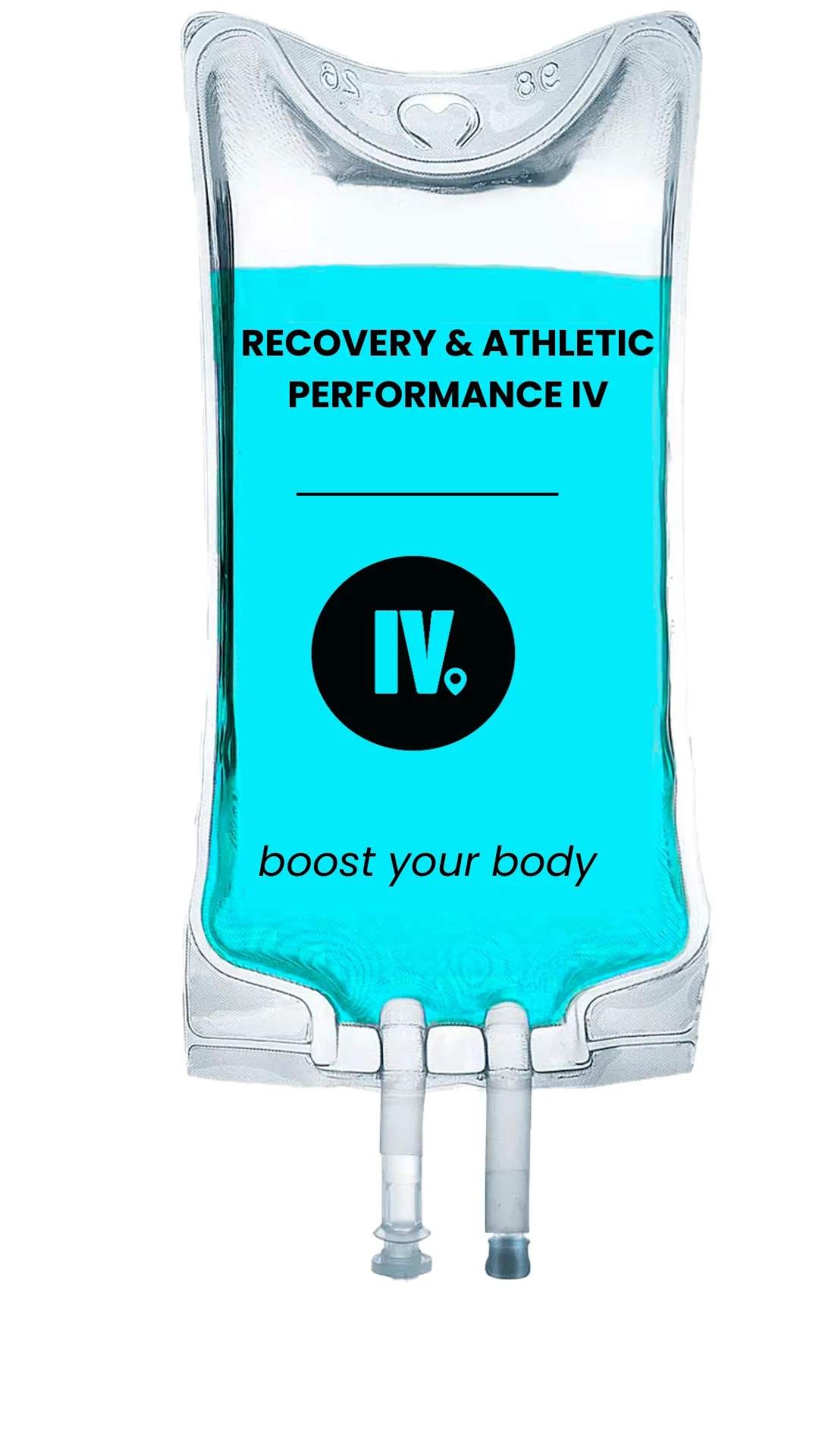
What is Recovery IV therapy?
It is the replacement of fluid and electrolytes lost during intense training, together with the intravenous delivery of nutrients involved in energy metabolism. It carries no claim of enhancing performance or curing muscle soreness. Sessions at IV Point take 30–45 minutes and follow a physician assessment.
Is Post-Training Muscle Soreness Caused by Lactic Acid?
No — and this is one of the sports world’s most widespread pieces of misinformation.
The muscle soreness you feel a day or two after training is called delayed-onset muscle soreness (DOMS). For years it was blamed on lactic acid accumulating in the muscles. That theory has been refuted.1
The reason is simple, and it’s about timing: lactate is cleared within about an hour after exercise. Delayed-onset soreness peaks 24–72 hours later. That gap alone invalidates the lactic-acid explanation.
So what is the real mechanism? Current evidence points to three things: microtrauma in the muscle fibres (especially in eccentric movements, where the muscle contracts while lengthening), the accompanying inflammation, and sensitization of pain fibres.1
Why do we tell you this? Because “we flush out the lactic acid” is used constantly in this space, and it isn’t true. There is no lactic acid to flush. And we make no such claim.
What Is the Foundation of Recovery?
Let’s say it up front: the determinants of recovery are the following, and no supportive treatment makes a meaningful difference without them.
1. Sleep. Recovery’s strongest and most neglected component. Muscle repair happens largely during sleep.
2. Adequate protein and energy intake. The building blocks of muscle repair come from food.
3. Gradual progression. Starting a new or unaccustomed movement slowly is the best-known way to prevent delayed-onset soreness — the body adapts through repetition.
4. Massage and cold-water immersion. The most-studied methods for reducing delayed-onset soreness.1
5. Active recovery. Light movement usually beats complete rest.
These are the foundation of recovery. Our place is on top of that foundation — narrower and more concrete.
So Where Does This Treatment Fit?
What remains is a real and narrow field: fluid and electrolyte loss.
Long, intense or hot-weather training causes marked fluid and electrolyte loss through sweat. That loss shows up as weakness, headache, muscle cramps and delayed recovery. When enough fluid can’t be taken by mouth, the IV route closes that gap directly.
In addition, B vitamins involved in energy metabolism and amino acids involved in tissue repair are included in the protocol as support during heavy training periods.
In short: we don’t cure your soreness and we don’t boost your performance. We close your fluid and nutrient gap.
About the Formula
Contents and doses are set individually after the pre-treatment assessment. The protocol includes:
- Fluid and electrolyte base: sterile isotonic sodium chloride solution — the main component
- Magnesium: for its role in muscle function and electrolyte balance
- B-vitamin complex: a cofactor in energy metabolism
- Amino acids: building blocks in tissue repair
- Vitamin C: for antioxidant support
Why aren’t doses listed here?
Doses depend on you, your training load and your condition on the day; we do not publish a standard dosing chart.
Potential Benefits
- Rapid support for fluid and electrolyte balance — especially when enough fluid can’t be taken by mouth
- Support for reducing cramp tendency — through electrolyte balance
- A contribution to energy metabolism — through B vitamins
- Support for nutrients involved in tissue repair — through amino acids
Effects vary from person to person. This treatment does not enhance athletic performance, does not cure muscle soreness, does not build muscle, and does not replace training, nutrition or sleep.
Who Might Consider This Supportive Treatment?
- Adults training regularly and intensely, with marked fluid loss
- People doing hot-weather or long endurance training
- People who can’t rehydrate by mouth after training because of nausea or loss of appetite
- People struggling to maintain fluid balance during a heavy tournament or camp period — including athletes visiting Istanbul for events
Note: if you feel excessively tired after training all the time, the underlying causes need investigating. Iron deficiency, B12 deficiency, thyroid dysfunction and inadequate energy intake are common in athletes and are identified with blood tests.
If you are a licensed athlete: check your federation’s rules and the relevant anti-doping regulations before any treatment. Those rules can cover not just substances but also methods of administration.
Who Is It Not Suitable For?
- Kidney failure — for magnesium excretion and fluid load
- Heart failure and serious heart disease — because of the risk of fluid overload
- Cardiac conduction disorders, marked bradycardia, AV block — because of magnesium
- Myasthenia gravis — because of magnesium
- A tendency to low blood pressure — magnesium can lower blood pressure
- Pregnancy and breastfeeding
- Fever or active infection — physician assessment comes first
- Under 18
- Known allergy to any component
Tell us about every medication and supplement you use. Magnesium can potentiate muscle relaxants and neuromuscular blocking agents, and can interact with blood-pressure medication.
Possible Side Effects
- Temporary redness, tenderness or bruising at the IV site
- From magnesium: facial flushing/warmth, temporary weakness, a drop in blood pressure
- Nausea or dizziness with a fast infusion
- Allergic reaction to a component (rare)
The magnesium infusion is given slowly, with vital-sign monitoring throughout. The treatment is carried out under the supervision of an anesthesiology specialist.
Timing
After training: where fluid loss is marked, the treatment can be given in the hours following the session.
Before training: we do not recommend it before a competition or an intense session. Trying an unfamiliar treatment before an important performance day makes no sense — and magnesium can cause temporary weakness.
When Should You See a Doctor Instead?
- Dark urine, severe widespread muscle pain and marked weakness after training — can be a sign of rhabdomyolysis and requires urgent assessment
- Chest pain, palpitations, fainting during exercise
- Persistent underperformance and fatigue — iron deficiency, B12 deficiency, thyroid dysfunction or inadequate energy intake should be investigated
- Muscle or joint pain that doesn’t heal — needs injury assessment
References
- Advances in Non-Pharmacological Strategies for DOMS: A Scoping and Critical Review of Recent Evidence. Journal of Functional Morphology and Kinesiology. 2025;10(4):452. mdpi.com
Written and medically reviewed by: Ömer Fatih Şahin, MD Specialist in Anesthesiology & Reanimation — Last updated: 27.08.2026
The content on this page is for informational purposes only and is not a substitute for medical treatment. The treatment is administered to individuals found suitable at a pre-treatment assessment. For sports injuries and persistent performance problems, please see a physician.